Unveil the stunning beauty of ancient Pyramids in Cairo Egypt
The ancient pyramids in Cairo are some of the world's most iconic landmarks. They draws travelers, historians, and photographers alike. These remarkable structures, carved from limestone and granite, stand proudly under the desert sun as symbols of an enduring civilization. With a legacy stretching back over four millennia, Cairo's pyramids are more than just monuments. They're living history that invite you to trace the steps of pharaohs and priests. Whether you're visiting for the first time or returning to relive the magic, the experience is unforgettable.
1. A Glimpse into Egypt's Majestic Legacy
The pyramids reflect the power, wealth, and religious beliefs of ancient Egypt. It is built during the Fourth Dynasty of the Old Kingdom. These grand tombs were designed to ensure the pharaoh's journey into the afterlife. Each stone, some weighing over 2-3 tons, was placed with mathematical precision. Explore the mughal architecture and Taj Mahal in Agra with our other guide. Today, archaeologists continue to uncover new chambers and passageways. That further deepens our understanding of ancient Egyptian life and spiritual beliefs.
2. Explore the Giza Pyramid Complex
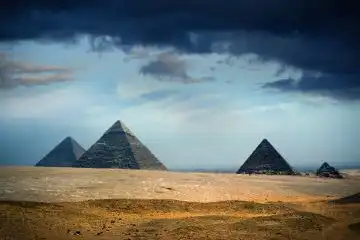
The Giza Plateau is the most famous and visited archaeological site in Egypt. It includes the Great Pyramid of Khufu (tallest), the Pyramid of Khafre, and the smaller Pyramid of Menkaure. These ancient pyramids in Cairo once gleamed with polished white casing stones, now mostly removed. That would have reflected the sunlight brilliantly. Visitors can meanwhile explore the vast area on foot, by camel, or even in a horse-drawn carriage. However, entry tickets allow access to the site. Further, additional tickets are needed to venture inside the pyramids themselves.
3. The Great Sphinx: Guardian of the Pyramids
The Great Sphinx of Giza, was carved from a single block of limestone. It is one of the largest and oldest statues in the world. Measuring 73 meters long and 20 meters high, this mythical beast represents strength and wisdom. Theories abound about its creation, but many believe it was built during the reign of Pharaoh Khafre. Its missing nose and partially buried body further add to its mystique. Legend says there are secret chambers beneath it-yet to be found. Above all, it's one of the most photographed monuments in Egypt.
4. Saqqara: The Step Pyramid of Djoser
About 30 kilometers south of Giza, Saqqara is a vast necropolis that pre-dates the Giza pyramids. The Step Pyramid of Djoser, designed by the architect Imhotep, is considered the prototype of all pyramids. It marked the shift from traditional mastaba tombs to stacked stone structures. The surrounding complex further includes temples, courtyards, and tombs filled with hieroglyphs. Saqqara is a quieter site with fewer tourists. That give visitors a chance to meanwhile connect deeply with Egypt's early architectural ingenuity.
5. Dahshur: Red and Bent Pyramids' Architectural Brilliance
Often overshadowed by Giza, Dahshur offers a raw and authentic look at pyramid evolution. One of the ancient pyramids in Cairo, the Red Pyramid was named for the reddish hue of its stones. However, it is Egypt's first successful smooth-sided pyramid. The Bent Pyramid, nearby, is particularly fascinating due to its unusual shape. Further, its angle abruptly changes halfway up. These engineering experiments were crucial in developing techniques used for the Giza pyramids. Few crowds, peaceful desert surroundings, and open interiors further make Dahshur a favorite for serious history buffs.
6. Inside the Pyramids: What to Expect
Venturing further inside the pyramids is not for the claustrophobic. Narrow shafts and steep tunnels lead to inner burial chambers. There, ancient rulers were once laid to rest with treasures and offerings. Inside Khufu's pyramid, the Grand Gallery leads to the King's Chamber, which still houses a granite sarcophagus. The air is cool and musty, and while the walls are mostly bare due to looting, the sense of wonder is palpable. Photography inside is restricted, therefore take time to absorb the experience without a lens.
7. Best Time to Visit the Ancient Pyramids in Cairo
Egypt's desert climate means scorching summers. Therefore, it's best to visit from October to April when temperatures are pleasant. Early mornings or late afternoons are ideal to avoid crowds and harsh sunlight. Fridays and Saturdays, being local weekends, these ancient pyramids in Cairo see more visitors. Sunrise at the Giza Plateau is particularly magical, with the silhouettes of the pyramids bathed in golden light. Above all, it's a perfect moment for reflective photos or a meditative pause.
8. How to Get There and Travel Tips
From downtown Cairo, the Giza pyramids are easily accessible by taxi or ride-share apps. For a smoother experience, book a guided tour. Many further include hotel pickup, skip-the-line tickets, and historical narration. If you're traveling independently, be prepared for hawkers near the entrances offering rides or trinkets-be polite but firm if uninterested. Comfortable walking shoes, a hat, sunscreen, and bottled water are must-haves. Hiring a certified Egyptologist guide can dramatically enhance your understanding of what you're seeing.
9. Unmissable Experiences Near the Pyramids
The area around Giza offers more than just the pyramids. Visit the Solar Boat Museum, which houses a reconstructed cedarwood vessel buried near Khufu's pyramid. That is believed to transport the pharaoh into the afterlife. Camel rides provide a sweeping view of the desert and monuments. If time allows, explore nearby Memphis, Egypt's ancient capital. There, massive statues and crumbling temples further whisper stories from a powerful past.
10. The Grand Egyptian Museum: A New Era of Preservation
Slated to be one of the world's largest archaeological museums, the Grand Egyptian Museum will house over 100000 artifacts. That further include the full collection from King Tutankhamun's tomb. Just a short drive from the Giza pyramids, it will be a modern complement to your ancient adventure. It stands out with advanced exhibits, immersive tech, and climate-controlled galleries. GEM is poised to redefine how we further connect with Egypt's past.
11. Cultural Etiquette and Responsible Tourism
Respect is crucial when visiting the ancient pyramids in Cairo. Don't touch carvings or climb on structures-this damages fragile surfaces. Dress modestly, especially for women, to align with local customs. Photography rules vary, so check signs and ask guides. Supporting local artisans and buying from government-licensed souvenir shops ensures ethical spending. Lastly, consider carbon-offsetting your travel to minimize environmental impact on these delicate sites.
12. Beyond the Pyramids: Dive Deeper into Egyptian Heritage
Once you have marveled at the pyramids, don't stop there. Explore Islamic Cairo, wander through Khan El Khalili Bazaar, or cruise down the Nile River. The Citadel of Saladin, Al-Azhar Mosque, and the Coptic Hanging Church reveal Cairo's diverse religious and architectural history. This blend of ancient and modern, sacred and secular, meanwhile creates a unique atmosphere. That further deepens your Egyptian journey.
13. Final Thoughts: Witnessing Timeless Greatness
The ancient pyramids in Cairo are more than world-famous tourist attractions-they're enduring symbols of human achievement. They challenge our understanding, stir our imaginations, and ignite a deep respect for ancient civilizations. Stand before these awe-inspiring structures to witness the ambition, faith, and genius of the Egyptians who built them. Whether you're drawn by history, mystery, or pure curiosity, Cairo's pyramids leave a lasting imprint on your soul.
Let others know
Post tags: